
Blog
Building a Manufacturing Quality Management System

Solution Consultant - Presales, AODocs · May 5, 2026 · Updated Oct 6, 2026

Introduction
In today’s competitive and highly regulated manufacturing landscape, building a manufacturing quality management system (QMS) is essential for organizations aiming to ensure products meet customer and regulatory standards, deliver consistent, high-quality products, and improve customer satisfaction. This article is designed for manufacturing managers, quality professionals, and operational leaders who are responsible for implementing or improving quality management practices within their organizations. We will cover the fundamentals of a manufacturing QMS, including its key components, the step-by-step process for setting one up, and how it aligns with international standards. Use these principles to organize evidence and improvement activities; compliance depends on applicable requirements and how the processes operate.
A robust manufacturing quality management system not only helps organizations comply with industry regulations but also improves operational efficiency, reduces waste, and fosters a culture of quality. Whether you are starting from scratch or formalizing existing processes, this guide will provide actionable insights to help you build an effective QMS tailored to your manufacturing environment.
Summary: The Value of a Manufacturing QMS
A manufacturing quality management system coordinates activities to meet both customer and regulatory requirements. By implementing a QMS, organizations can:
- Meet Customer and Regulatory Requirements: A QMS supports defined customer and regulatory requirements through controlled processes and evidence. The organization must assess whether those processes meet requirements in scope.
- Streamline Operations and Cut Waste: Standardized processes and monitoring help teams identify waste and quality costs. Measure prevention, appraisal and failure costs before estimating savings.
- Improve Product Quality: By focusing on process control and corrective actions, a QMS drives higher product quality and reliability, and standardized processes can lead to fewer customer complaints.
- Comply with Industry Standards: A QMS helps organizations comply with industry regulations and standards, providing the framework needed to support certifications, market access, and customer trust.
What is a Quality Management System (QMS)?
Simply put, a quality management system (QMS) is the connection and interaction of people, processes, and documentation within an organization. Think of a QMS as the glue that binds these elements together. It is the quality system framework used to manage quality and support applicable requirements. FDA regulations and ISO standards have different scopes; identify those relevant to products, processes and records.
Key components of a QMS include:
- Quality Policy: The organization’s formal statement of its commitment to quality and continuous improvement, and it establishes the guiding principles of quality.
- Quality Objectives: Measurable goals tied to the QMS that help the organization achieve quality.
- Document Control: Systems and processes to ensure that all documents are current, accessible, and properly managed.
- Corrective Actions: Procedures for identifying, investigating, and addressing non-conformities to prevent recurrence.
While different types of manufacturers will have some variations in terms of regulatory oversight and the need to be compliant with those regulations as well as industry guidelines, there are still recognized quality standards relevant to the operation. Identify applicable requirements and retain evidence of how they are addressed. A QMS does not establish an audit-ready state at all times.
Keep in mind that these regulations are not just going to focus on the products themselves. There will also be a need to meet or exceed OSHA stipulations as to workplace safety, the handling of specific types of materials, and a host of other aspects. This is where the intersection of quality and safety management systems supports coordination. Evaluate workplace safety obligations separately; QMS software does not replace hazard assessment or needed safety controls.
As I mentioned at the beginning of this post, you would be well advised to think through what you're currently doing, and then take the time to understand how your business can develop a quality culture. This is more than a mission statement. A good quality culture should focus on preventing errors, addressing applicable requirements, and making improvements during the process.
This is an important step because you'll then want to determine what aspects of that quality culture can be best handled by a manufacturing QMS platform. If your needs can't be met by the QMS you may be considering, you'd be well-served to keep looking for one that can address your needs out of the box, or one that is designed to be customized to meet your needs.
While your specific need for a manufacturing QMS may have some variations, in most cases, you'll want to look for a QMS that can handle the following core functions. Effective quality processes also include inspection and testing to ensure products meet specified standards, with risk management used during planning to identify and mitigate risks.
Now that we've covered the basics of a QMS, let's look at how to set one up in a manufacturing environment.
Setting Up a Manufacturing QMS
Presuming that you have a solid grasp of your quality needs and have selected what you feel to be the best QMS for manufacturing, you now will want to set everything up. For many organizations, this means first installing AODocs in their Google Workspace environment and ensuring they meet the system and browser requirements for AODocs. Before full deployment, use a pilot to test handoffs and configuration choices. If ERP integration is needed, define data, timing, ownership and error handling, then verify available integration and configuration. Do not assume real-time monitoring is included.
Map Out Your Manufacturing Processes
This is an essential first step to setting up the QMS. If you've thought through your manufacturing and business processes as they stand now, or where you need them to be, now you'll want to map all of the process steps required within the manufacturing facility, taking into account how a governed document management platform like AODocs will support those processes.
To map your processes, follow these steps:
- Identify all key manufacturing and business processes, including supplier quality workflows as part of your core processes.
- Break down each process into individual steps, noting inputs, outputs, and responsible parties.
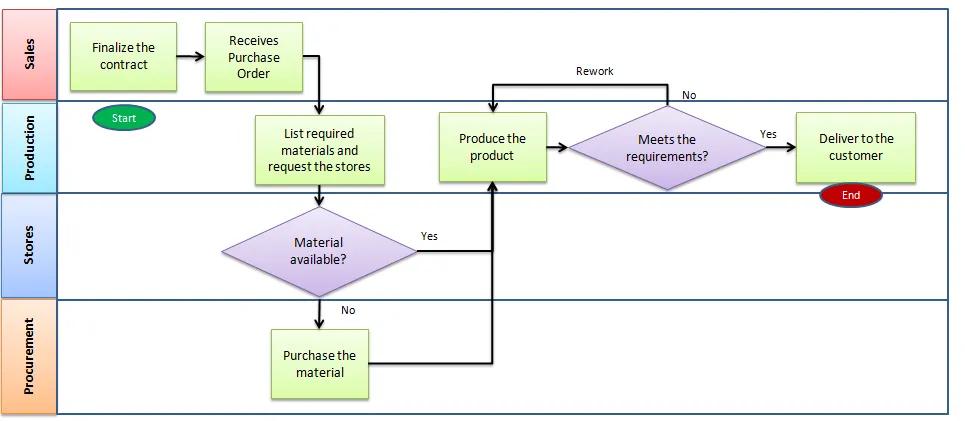
- Visualize the workflow using flowcharts or diagrams to highlight handoffs and potential bottlenecks.
- Analyze the mapped processes to identify inefficiencies, risks, and areas for improvement.
- Prioritize processes that are critical to quality and have the most impact on the end product.
Map supplier quality with tools such as supplier scorecards to evaluate supplier performance and verify materials meet quality specifications. Ongoing supplier assessment helps surface risks before they affect production, while streamlined supplier processes support compliance with quality goals.
Understanding the way the product moves through the pipeline allows for the identification of inefficiencies, risks, and where improvements can be put in place. This also shows where handoffs are, as these are notorious for causing issues to be resolved.
Mapping everything out with flowcharts makes it easy to visualize your processes and to identify those areas that could be improved or refined.
Once your processes are mapped, you can start understanding which ones of these steps are “critical to quality” or have the most effect on the end product. An integral part of the QMS is process improvement, so effective supplier management minimizes costs and enhances business performance, and ensuring the processes are efficient, and making improvements where needed, only makes the organization stronger.
Create Processes, Procedures, and Protocols
Now that you have the critical processes identified, the next step is to document them. A QMS includes documented processes and procedures, which are essential for ensuring consistency and compliance. Standard operating procedures (SOPs) are key QMS components that support quality assurance and regulatory compliance by providing clear, step-by-step instructions for each task.
To document your processes and procedures:
- Develop checklists, work instructions, SOPs, or manuals for each critical process.
- Implement a document management solution to control versions and access, such as AODocs documents.
- Establish governance policies to define who can create, edit, and approve documents.
- Use various formats (text, video, infographics, flowcharts) to communicate procedures effectively.
- Ensure all supporting materials are updated in sync when procedures change.
Automated workflows strengthen the document control process and compliance tracking.
A QMS includes quality policy, document control and corrective actions. Define how supporting videos, infographics and flowcharts will be controlled before evaluating document workflows in AODocs and the AI-native document management platform. Check current product scope and configuration against those requirements.
If your text-based procedure manual gets an update, it's a big plus if your system can flag all of the supporting materials that would also need a refresh. You'll want these elements to be in sync at all times – you can imagine the confusion if a video says to do something one way, while a text-based document says to do something different. Documented quality policies and linked training management help employees understand current quality requirements when procedures change.
Continuously Improve or Refine Your Manufacturing Processes and Operations
As manufacturing processes grow and change, including new technologies and tools, so must the processes be improved to ensure efficiencies are gained, risks are reevaluated with each change, and quality control is maintained across the production process. Using tools like FMEA (Failure Modes and Effects Analysis) for risk analysis when running large batches brings many benefits.
To ensure continuous improvement:
- Regularly review and analyze process performance data.
- Identify areas for improvement and implement corrective and preventive action tied to root-cause analysis. Nonconformance management should include identification, evaluation, and disposition of quality issues, and it should connect directly to CAPA processes. CAPA processes assess the need for corrective actions and address root causes of quality issues.
- Track and schedule preventative maintenance for equipment to avoid costly failures.
- If maintenance alerts need integration, define the event, responsible owner and failure handling before evaluating AODocs APIs. Confirm API scope and configured behavior before relying on an alert.
- Train employees to identify and report issues early, fostering a proactive quality culture.
This integration helps reduce expensive rework or recalls.
One more thing to keep in mind is the employees. Training personnel is essential for successful QMS implementation, and training management should track completion, progress, and effectiveness assessments to support continual improvement and risk mitigation. A quality culture demands that they are trained to identify issues within the manufacturing process. Identifying these problems early and taking the steps to remedy them will likely save a lot of costs down the line.
With your processes mapped, documented, and a culture of continuous improvement in place, the next step is to ensure your QMS aligns with international standards.
International Standards and QMS
I should mention that ISO 9001 is the core and most widely recognized ISO standard for quality management system implementation. It is a good resource to follow even if you are not working towards a certification, as it addresses such things as development quality, supply chain management, and employee training to name a few. All of these things are needed for operations.
ISO 9001 addresses quality management systems. Confirm the current edition and applicable transition arrangements when selecting requirements. Other standards address particular industries or management disciplines; determine their relevance to the operation.
- ISO 14000: Environmental management
- ISO 13485:2016: Medical devices and equipment, especially for medical device manufacturing and medical device manufacturers
- ISO 29001: Gas and oil industry
- ISO/IEC 90003: Software engineering
- ISO 18091: Local government processes
- ISO 26262: Functional safety for automotive equipment
- IATF 16949 (replaces the ISO/TS 16949): Requirements for quality management systems for automotive OEMs and suppliers, and the main standard for the automotive industry, especially automotive manufacturing
FDA’s Quality Management System Regulation became effective on February 2, 2026, amending 21 CFR Part 820 and incorporating ISO 13485:2016 by reference for manufacturers within its scope. Assess food safety requirements separately; ISO 22000 is a food safety management standard.
A QMS organizes process controls, quality evidence and improvement activities. Assess costs and results in the actual operation. A quality culture and QMS software supported by a cloud-based document management platform like AODocs operating under clearly defined AODocs Terms of Service do not themselves establish compliance. Evaluate configured controls and applicable requirements; presentations at events such as the Google Cloud Summit France 2026 do not replace that assessment.
Conclusion
Building a manufacturing quality management system is a strategic investment that enables organizations to meet customer and regulatory requirements, streamline operations, and comply with industry standards. By following a structured approach (mapping processes, documenting procedures, and fostering continuous improvement) you can create a QMS that supports applicable requirements and provides evidence for improvement. Whether you are formalizing existing practices or starting anew, a well-implemented QMS is the foundation for a culture of quality and sustained growth in the manufacturing sector.
Frequently asked questions
What should a manufacturer map before configuring a QMS?
A manufacturer should map process inputs, outputs, responsibilities and handoffs before configuring a QMS. Identify the steps that affect product quality, including supplier inputs and acceptance checks. That map gives document owners and workflow designers a concrete basis for deciding which procedures, approvals and records each process needs.
How should manufacturers keep training materials aligned with procedures?
Manufacturers should identify the training materials linked to each controlled procedure and review those materials when the procedure changes. Release the approved instruction with the relevant training update and track the required follow-up. A current procedure alongside an outdated demonstration can give employees conflicting directions.
What should a manufacturing QMS pilot test?
A manufacturing QMS pilot should test a representative process from document creation through approval, use and evidence retrieval. Include ordinary work and exceptions, such as a rejected review or revised instruction. Confirm that users can perform their tasks and that process owners can recover the evidence needed before expanding the rollout.
Which quality regulation applies to US medical device manufacturing in 2026?
FDA’s Quality Management System Regulation became effective on February 2, 2026, amending 21 CFR Part 820 and incorporating ISO 13485:2016 by reference. It applies to finished device manufacturers intending commercial distribution, with specific exemptions and additional FDA requirements. Scope the applicable obligations before treating a general manufacturing QMS as sufficient.


